100 BPM is the top edge of the 60–100 range the American Heart Association uses for adults at rest. In CDC data, a resting 100 is higher than about 97–98 in 100 people, depending on age. While walking, after standing up or after coffee, 100 is common. Pick your situation for your own answer.
CDC data on resting pulse · AHA ranges · Numbers update for your age
100 BPM
ages 40–59
Top edge of the usual resting range — higher than about 98 in 100 people aged 40–59
Middle value at rest for ages 40–59: 70 BPM.
Resting pulse, your age: light band = middle 90 in 100 · dark = middle half · line = middle value · dot = 100
100 BPM at rest, by age and sex.
Where a resting 100 BPM sits — percentile (higher than X in 100 people of that age)
| Age | Everyone | Women | Men | Middle value | 90 in 100 between |
|---|---|---|---|---|---|
| 16–19 | 97 | 95 | 98 | 73 | 54–95 |
| 20–39 | 98 | 97 | 98 | 71 | 54–92 |
| 40–59 | 98 | 98 | 98 | 70 | 54–91 |
| 60–79 | 98 | 98 | 98 | 69 | 54–91 |
| 80+ | 98 | 99 | >99 | 70 | 54–93 |
CDC/NCHS NHANES 1999–2008: seated resting pulse counted by a trained examiner, people with no condition or medicine that changes pulse. “>99” = above the 99th percentile · “<1” = below the 1st. Full table for every age.
When 100 BPM is common
- Standing up or walking — your heart speeds up within seconds to move blood against gravity.
- After coffee, a big meal or alcohol — pulse often rises for an hour or two.
- Stress, heat or a fever — all push the number up while they last.
- Waking from an alarm or a bad dream — it settles within minutes.
One reading moves around. Your number on 7 mornings, before you get up, is the one to compare.
When to talk to a clinician
A single reading moves around a lot. If your resting pulse is above 100 on most mornings, or below 50 and you are not a trained endurance athlete, mention it at your next checkup — bring your readings.
If a fast or slow pulse comes with chest pain, fainting, feeling about to faint, or trouble breathing, call 911 or your local emergency number now.
Nearby numbers

Not sure your number is right? Pulse reads it with your iPhone camera.
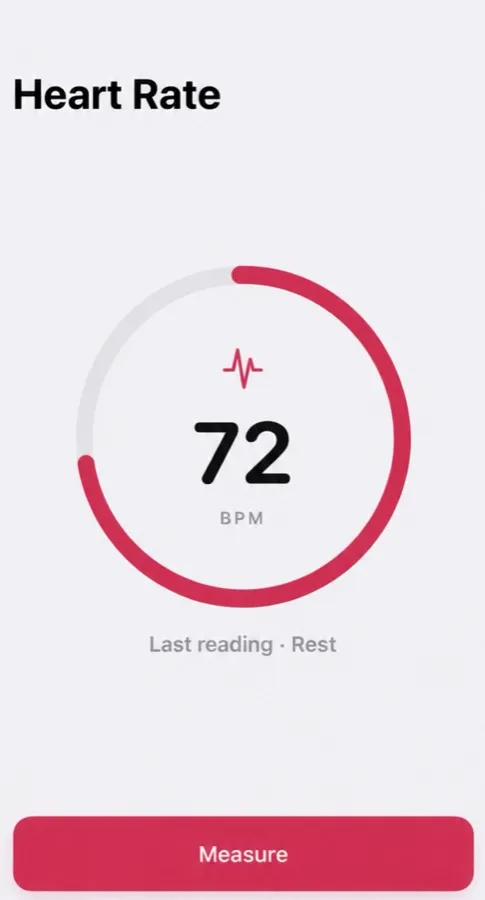
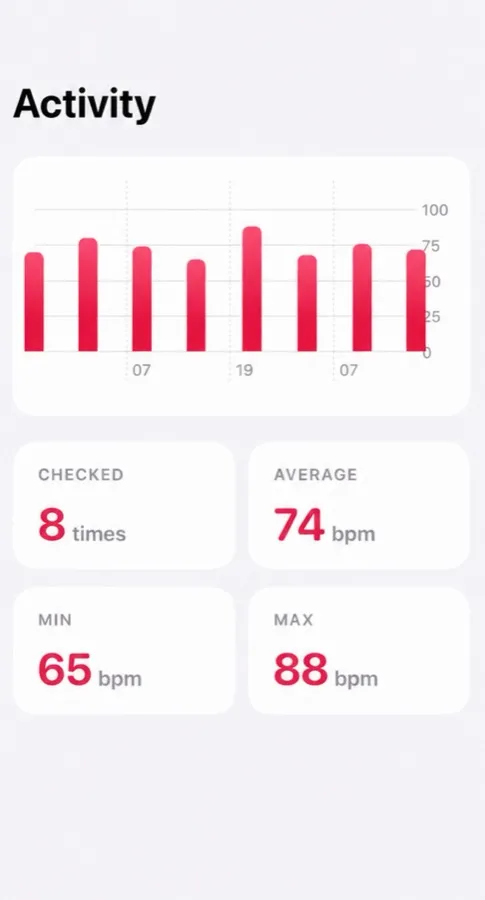
Cover the back camera with your fingertip — Pulse reads your heart rate from the light and keeps every reading, with your average, lowest and highest.
- Reads your pulse in about 15 seconds
- Tag each reading: morning, rest, workout, before bed
- History with average, min and max
Free to download, optional Pro. Not a medical device: Pulse reads and keeps your pulse, and it does not detect or predict disease. What the app does
Questions people ask
Is 100 BPM normal at rest?
It is the top edge of the 60–100 range the AHA uses. In CDC data only about 2–3 in 100 people had a resting pulse at 100 or above. If yours is 100 or more on most quiet mornings, mention it at your next checkup.
Is 100 BPM normal when walking?
Yes. Walking typically raises your pulse well above its resting level — 100 is about 55% of the estimated maximum for a 40-year-old, which the AHA counts as moderate effort.
Why is my heart rate 100 after eating or coffee?
Digestion and caffeine both raise the pulse for a while. Count again after an hour of sitting quietly to get your true resting number.
General information, not medical advice — medical disclaimer. Reviewed : sources and reference dates are listed below.
Sources · numbers checked · how we calculate · report an error
- American Heart Association. Target Heart Rates Chart.
- Ostchega Y, Porter KS, Hughes J, Dillon CF, Nwankwo T. Resting pulse rate reference data for children, adolescents, and adults: United States, 1999–2008. National Health Statistics Reports No. 41. NCHS, 2011.
- Tanaka H, Monahan KD, Seals DR. Age-predicted maximal heart rate revisited. J Am Coll Cardiol. 2001;37(1):153–156.
- Mayo Clinic. Heart rate: What’s normal? (Expert answers).