In a study of 1,041 healthy pregnancies, the mother’s median heart rate was 82 BPM at 12 weeks, peaked at 91 BPM at 34 weeks and eased to 89 at 40 weeks. That rise of about 9 beats is smaller than many textbooks say. Compare your own resting pulse below. This page is not about the baby’s heartbeat.
Your numbers
63–105 BPM · 88 BPM is inside the range at 12 weeks.
The mother’s heart rate in healthy pregnancies
Middle value
82bpm
94 in 100
63–105bpm
88 BPM is inside the range 94 in 100 healthy pregnancies fell in at 12 weeks.
Three points from the study
The figures come from women in the INTERBIO-21st Fetal Study, measured every 4 to 6 weeks. The range below is the 3rd to 97th centile, so 94 in 100 pregnancies fell inside it.
- 12 weeks: median 82 BPM, range 63–105
- 34 weeks: median 91 BPM, range 68–115
- 40 weeks: median 89 BPM, range 65–114
The paper also found that heart rates above 100 BPM occurred in more than 1 in 10 readings from 18 weeks on. So 100 alone is not a sign of trouble in pregnancy, which differs from the usual adult range.
What textbooks say
It is often taught that heart rate rises by 10–15 BPM from the first trimester onward, or by 20–25% from before pregnancy. This study found 9 BPM between 12 and 34 weeks. It did not measure women before they were pregnant, so it cannot settle the second figure.
When to call your midwife or doctor
Palpitations are common in pregnancy, and the NHS lists pregnancy among their everyday causes. Contact your midwife or doctor if they keep coming back or last more than a few minutes. Call 911 for chest pain, shortness of breath or fainting. The tool above is general information and does not replace your antenatal care.
When to talk to a clinician
A single reading moves around a lot. If your resting pulse is above 100 on most mornings, or below 50 and you are not a trained endurance athlete, mention it at your next checkup — bring your readings.
If a fast or slow pulse comes with chest pain, fainting, feeling about to faint, or trouble breathing, call 911 or your local emergency number now.
More questions

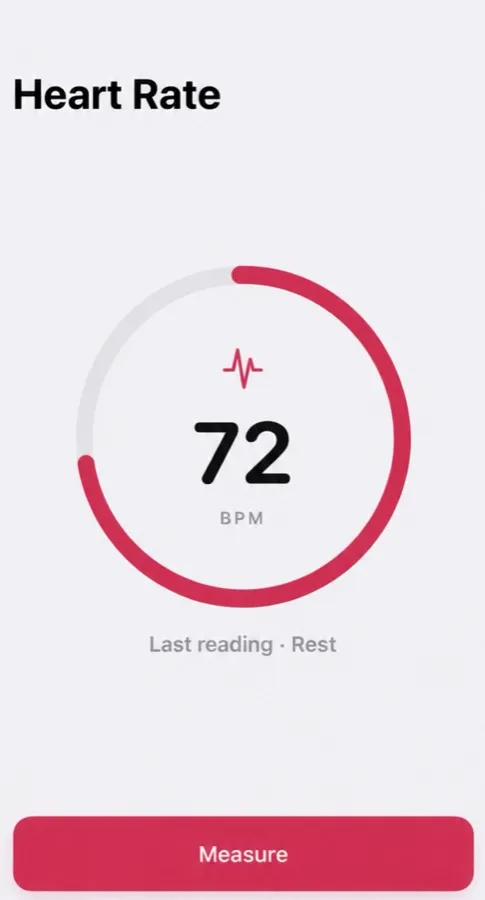
Want a real reading? Pulse reads it with your iPhone camera.
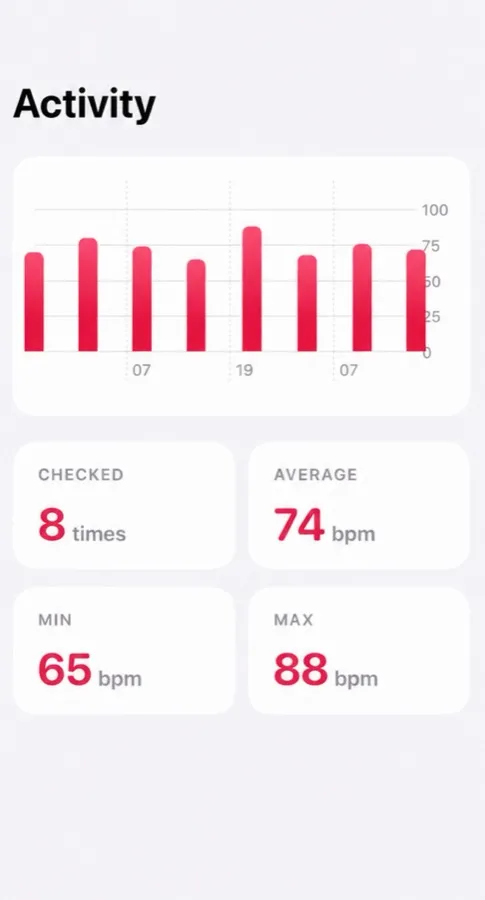
Cover the back camera with your fingertip — Pulse reads your heart rate from the light and keeps every reading, with your average, lowest and highest.
- Reads your pulse in about 15 seconds
- Tag each reading: morning, rest, workout, before bed
- History with average, min and max
Free to download, optional Pro. Not a medical device: Pulse reads and keeps your pulse, and it does not detect or predict disease. What the app does
Questions people ask
What is a normal heart rate when pregnant?
In 1,041 healthy pregnancies, 94 in 100 were between 63 and 105 BPM at 12 weeks, and between 68 and 115 BPM at 34 weeks.
Is 100 BPM normal during pregnancy?
It can be. Readings above 100 occurred in more than 1 in 10 observations from 18 weeks in that study. Tell your midwife if you also feel unwell.
Does this page cover the baby’s heart rate?
No. These numbers are the mother’s own pulse. Ask your midwife about the baby’s heartbeat.
General information, not medical advice — medical disclaimer. Reviewed : sources and reference dates are listed below.
Sources · numbers checked · how we calculate · report an error