Fever was associated with a higher heart rate in US adult emergency visits: each 1 °C rise in body temperature (1.8 °F) went with about 7 BPM more. In UK children’s emergency departments the figure was about 10 BPM per degree. These are rough averages, not limits. Type a temperature below for a rough estimate.
Your numbers
About 86 BPM · rough estimate, not a limit.
Rough estimate for an adult with this fever
38.5 °C is 1.5 °C above 37 °C. At about 7 BPM per degree, that adds roughly 11 BPM to a usual 75. A rough average, not a limit.
Temperature and measured pulse diary
Record actual temperature and pulse together over several days. The estimate above is never saved as a measurement.
Saved only in this browser on this device. Export before clearing browser data. No account or sync. For a general dated pulse sheet or a doctor PDF, use the heart rate log.
No observations yet.
Where the numbers come from
- Adults: a study covering about 123 million estimated US adult emergency visits found 7.2 BPM per 1 °C (95% CI 6.2–8.3). The same paper’s single-hospital sample of 8,715 visits found 10.4.
- Children: a UK emergency department study found about 10 BPM per 1 °C. Agitation was not accounted for, and crying raises a child’s pulse too.
Don’t apply the child figure to adults, or the adult figure to children. Both come from people who came to an emergency department, so they may not fit someone resting at home.
Why fever speeds the heart
A fever raises your body’s demand for blood flow and oxygen, and it pushes more blood toward the skin to shed heat. The heart answers with more beats. A rise in pulse with a temperature is expected.
When a fast pulse with fever needs care
Get medical help if the pulse stays very fast after the fever falls, or if there is confusion, chest pain, trouble breathing, a stiff neck, or a very drowsy or floppy child. For babies and young children, follow your local health service’s fever advice rather than a heart rate number. The estimate on this page is for curiosity, not a safety check.
When to talk to a clinician
A single reading moves around a lot. If your resting pulse is above 100 on most mornings, or below 50 and you are not a trained endurance athlete, mention it at your next checkup — bring your readings.
If a fast or slow pulse comes with chest pain, fainting, feeling about to faint, or trouble breathing, call 911 or your local emergency number now.
More questions

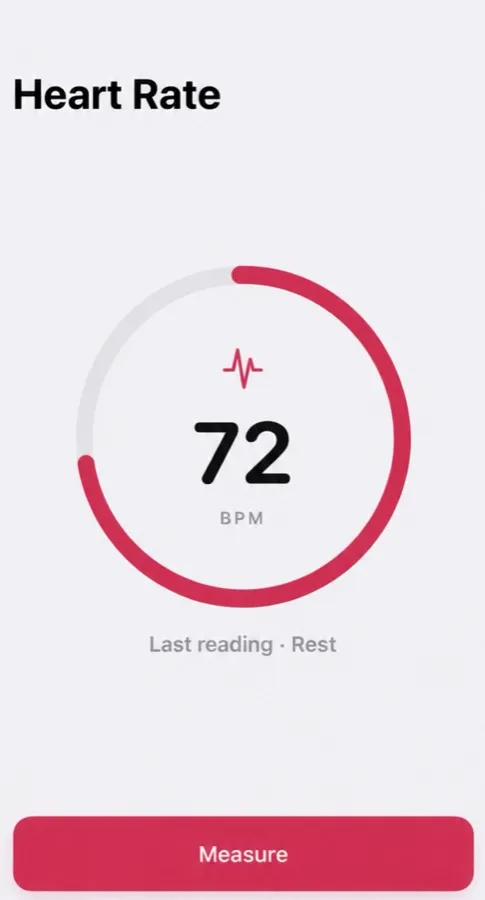
Want a real reading? Pulse reads it with your iPhone camera.
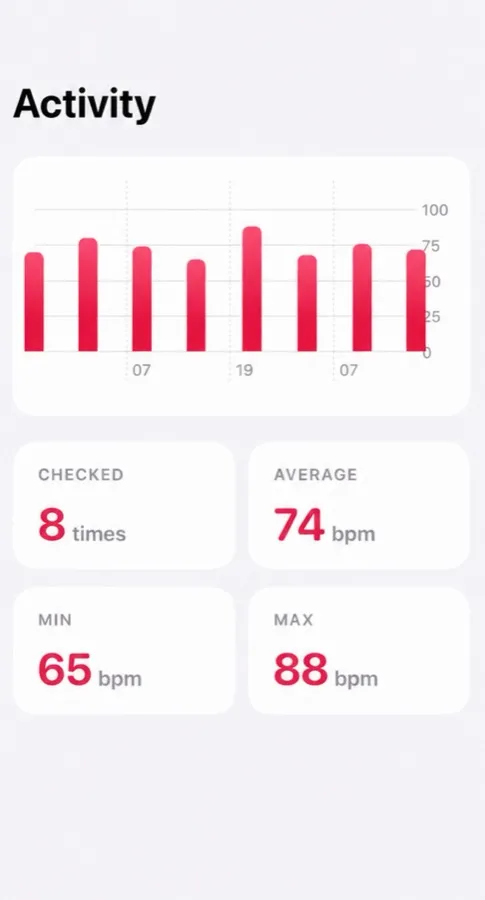
Cover the back camera with your fingertip — Pulse reads your heart rate from the light and keeps every reading, with your average, lowest and highest.
- Reads your pulse in about 15 seconds
- Tag each reading: morning, rest, workout, before bed
- History with average, min and max
Free to download, optional Pro. Not a medical device: Pulse reads and keeps your pulse, and it does not detect or predict disease. What the app does
Questions people ask
How much does heart rate increase with fever?
About 7 BPM per 1 °C (1.8 °F) in adult emergency visits, and about 10 BPM per 1 °C in children.
Is 110 BPM normal with a fever?
It is higher than the average rise. A fever of 39 °C adds about 14 BPM in adults, so a usual 75 would land near 89. People vary, but if your pulse is well above the estimate or you feel very unwell, get checked.
What is the heart rate rule for fever in Fahrenheit?
About 4 BPM for each 1 °F in adults, from the 7 BPM per 1 °C estimate.
General information, not medical advice — medical disclaimer. Reviewed : sources and reference dates are listed below.
Sources · numbers checked · how we calculate · report an error
- Kirschen GW, Singer DD, Thode HC Jr, Singer AJ. Relationship between body temperature and heart rate in adults and children: a local and national study. Am J Emerg Med. 2020;38(5):929–933.
- Davies P, Maconochie I. The relationship between body temperature, heart rate and respiratory rate in children. Emerg Med J. 2009;26(9):641–643.
- Quer G, Gouda P, Galarnyk M, Topol EJ, Steinhubl SR. Inter- and intraindividual variability in daily resting heart rate and its associations with age, sex, sleep, BMI, and time of year. PLoS One. 2020;15(2):e0227709.