Right after you wake — before you sit up — your heart rate is usually at its lowest of the waking day. It climbs within seconds of standing and keeps rising with movement, food and coffee. That is why the American Heart Association suggests checking your resting pulse in the morning before you get out of bed. Check it for 7 mornings to find your real baseline.
Why the wake-up number is the useful one
During the day your pulse reacts to everything: posture, stairs, a meeting, a second coffee. In bed, just awake, almost none of that has happened yet. The number you count then is the closest you get to a true resting pulse — the same kind of number the CDC measured after people sat quietly for about 4 minutes.
In that CDC data on 14,200 adults, the middle resting pulse was 69–71 BPM in every adult age group, and 90 in 100 adults sat between 54 and 93.
Why it can be higher some mornings
- Alarm clocks: waking suddenly bumps the pulse for a few minutes.
- A short or broken night, late meals or alcohol the evening before.
- A cold or fever coming on — often one of the first things that shows up.
- A hard workout the day before.
- Getting up first — even a walk to the bathroom adds beats.
How to use it
Count for 30 seconds and double it, at the same time and in the same position each morning. Write it down for 7 days, then take the middle value — one odd morning won’t move it. The 7-morning check adds the reminders to your calendar and works out the middle value for you.
A morning number that drifts up over many weeks without an obvious reason is worth noting and mentioning at your next checkup.
When to talk to a clinician
A single reading moves around a lot. If your resting pulse is above 100 on most mornings, or below 50 and you are not a trained endurance athlete, mention it at your next checkup — bring your readings.
If a fast or slow pulse comes with chest pain, fainting, feeling about to faint, or trouble breathing, call 911 or your local emergency number now.
More questions

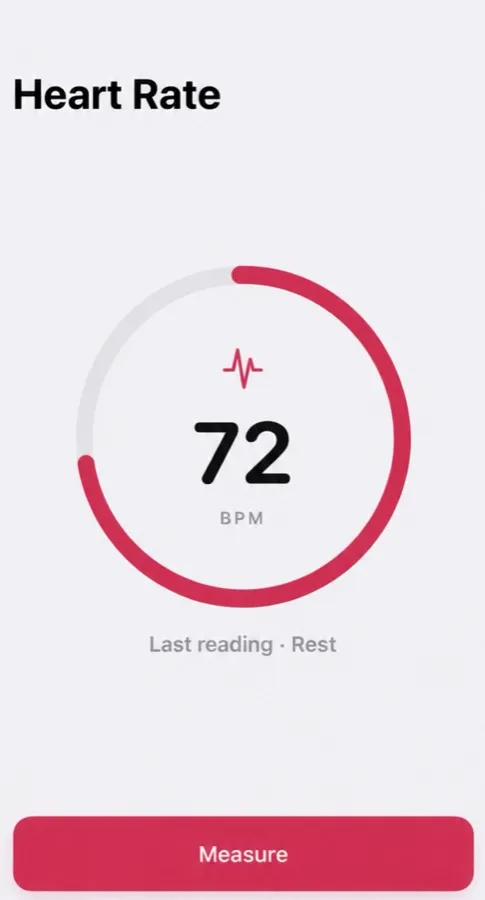
Want a real reading? Pulse reads it with your iPhone camera.
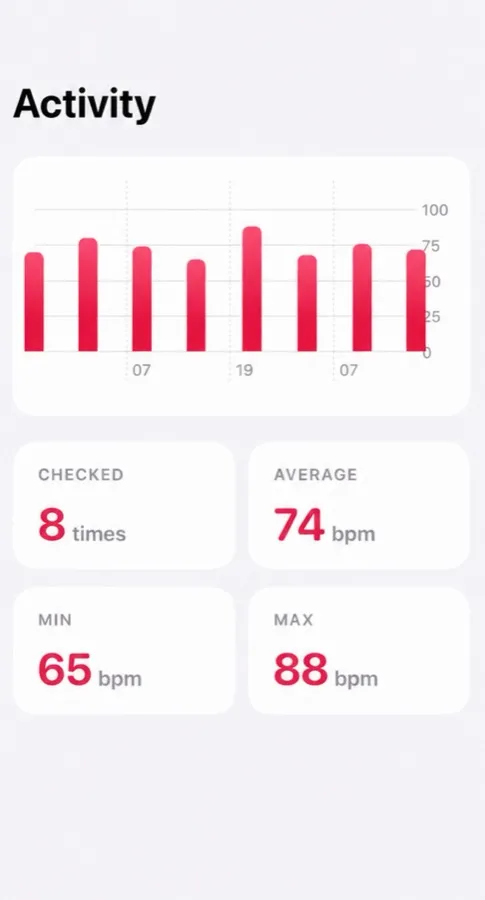
Cover the back camera with your fingertip — Pulse reads your heart rate from the light and keeps every reading, with your average, lowest and highest.
- Reads your pulse in about 15 seconds
- Tag each reading: morning, rest, workout, before bed
- History with average, min and max
Free to download, optional Pro. Not a medical device: Pulse reads and keeps your pulse, and it does not detect or predict disease. What the app does
Questions people ask
Is it normal for heart rate to be high in the morning?
It rises quickly once you get up, so a reading taken after you have been moving around will be higher than one taken in bed. Compare in-bed readings with each other.
What is a good morning resting heart rate?
For adults the AHA uses 60–100 BPM at rest; in CDC data the middle value is about 70. Your own trend over weeks matters more than any single number.
General information, not medical advice — medical disclaimer. Reviewed : sources and reference dates are listed below.
Sources · numbers checked · how we calculate · report an error