Caffeine may increase your heart rate, says MedlinePlus, but the size of the effect varies by person and small studies disagree. A big meal can also lift your pulse for a while. For your real resting number, sit quietly for 5 minutes, then count your pulse, or check it in the morning before any coffee.
What raises it
- Caffeine — coffee, tea, energy drinks, pre-workout powders. MedlinePlus says it may increase the heart rate or cause a tremor.
- Digestion — a big meal sends more blood to the gut, and the heart speeds up to keep up.
- Alcohol — see alcohol and heart rate.
- Nicotine.
What the research can and can’t say
We looked for a solid estimate of how many beats a cup of coffee adds in healthy adults and did not find one we would stand behind. Small trials point in different directions, so we are not quoting a number.
The largest recent trial, published in the New England Journal of Medicine, gave 100 adults coffee or no coffee on alternating days while wearing heart monitors. Early beats from the upper chambers did not differ significantly (58 vs 53 a day). Early beats from the lower chambers were more common on coffee days (154 vs 102 a day), which the authors call a lead for more research, not a settled result.
Count, wait, count again
The simplest test is your own: count your pulse before your coffee, then again 30 and 60 minutes after. If the difference is small, coffee isn’t moving your number much. Repeat it on two or three different days before you decide anything — one test can be thrown off by a short night or a stressful morning. Use the count converter to turn each count into BPM.
When it matters
If you are comparing yourself with the age tables, use a number taken before coffee — the CDC numbers are seated resting readings. If coffee gives you a racing or irregular-feeling heartbeat, cutting back is worth a try, and it is worth mentioning to your clinician.
Other things that bump a resting reading
- Standing up — your pulse rises within seconds; sit for 5 minutes before you count.
- Talking or reading messages while you count.
- Exercise in the last hour, including a quick walk to get your coffee.
- Feeling cold, hot or rushed.
- A full bladder or a big meal.
None of these mean anything is wrong. They only mean the number you counted is not your resting number. That is why the most useful single reading of the day is the one taken in bed, before your first cup — and why the 7-morning check takes the middle of seven, so one rushed morning doesn’t count for much.
When to talk to a clinician
A single reading moves around a lot. If your resting pulse is above 100 on most mornings, or below 50 and you are not a trained endurance athlete, mention it at your next checkup — bring your readings.
If a fast or slow pulse comes with chest pain, fainting, feeling about to faint, or trouble breathing, call 911 or your local emergency number now.
More questions
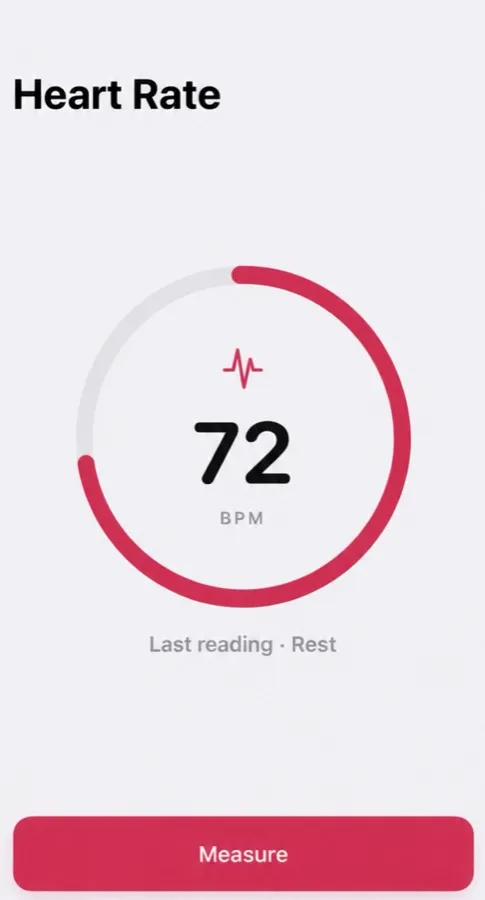
Want a real reading? Pulse reads it with your iPhone camera.
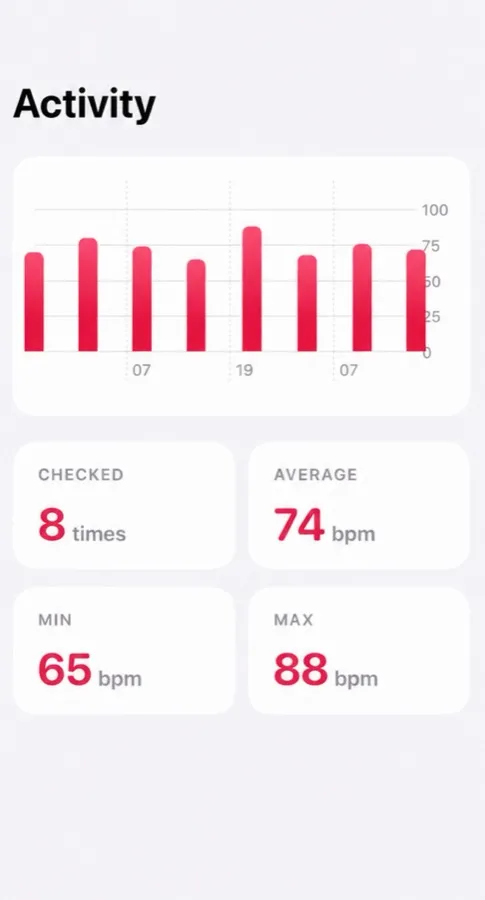
Cover the back camera with your fingertip — Pulse reads your heart rate from the light and keeps every reading, with your average, lowest and highest.
- Reads your pulse in about 15 seconds
- Tag each reading: morning, rest, workout, before bed
- History with average, min and max
Free to download, optional Pro. Not a medical device: Pulse reads and keeps your pulse, and it does not detect or predict disease. What the app does
Questions people ask
How long does coffee raise heart rate?
It varies by person, and we have not found a reliable figure. Run your own test: count before your coffee, then at 30 and 60 minutes.
Is 100 BPM after coffee normal?
It is common for a while after coffee. More about 100 BPM.
General information, not medical advice — medical disclaimer. Reviewed : sources and reference dates are listed below.
Sources · numbers checked · how we calculate · report an error
- MedlinePlus. Stimulants (pseudoephedrine, caffeine; reviewed January 2025).
- Marcus GM, Rosenthal DG, Nah G, et al. Acute effects of coffee consumption on health among ambulatory adults. N Engl J Med. 2023;388(12):1092–1100.
- American Heart Association. Target Heart Rates Chart.
- Mayo Clinic. Heart rate: What’s normal? (Expert answers).