A resting heart rate below 60 BPM is called bradycardia, but it is not always a problem. Well-trained athletes commonly sit at 40–60 BPM, and people who are young or fit may normally run low. A low number with dizziness, fainting or unusual tiredness should be checked. Type yours below to compare.
Your resting pulse
54 BPM at rest is below the 60–100 range the AHA uses for adults — lower than about 95 in 100 people aged 40–59 (CDC).
Resting pulse · ages 40–59 · CDC
Percentile
5of 100
Middle value
70bpm
90 in 100 between
54–91bpm
CDC sample
4,968people
Is a low resting heart rate good?
Often, yes, if you feel well. Fit hearts pump more per beat, so they need fewer beats at rest. In CDC data on 14,200 adults, the middle resting pulse was about 70, so a number in the 50s is lower than most people’s without being strange for someone who trains.
Low is not automatically better, though. What counts is your own usual number and how you feel.
When low is worth checking
- You feel dizzy or light-headed, or you faint.
- You are unusually tired or short of breath.
- You feel confused.
- Your number has dropped a lot from your usual and you do not know why.
- You take a medicine that slows the heart. Beta blockers work partly by slowing your heartbeat, so ask your prescriber what number to expect.
Fainting or trouble breathing means call 911. See what heart rate is dangerous.
Athletes
MedlinePlus lists 40–60 BPM as normal for well-trained athletes. Endurance training lowers the resting pulse by a few beats in trials, and years of training can take it further. If you train hard and feel well, a number in the 40s or 50s is usually your normal. A sudden change from your usual number is more interesting than the number itself.
When to talk to a clinician
A single reading moves around a lot. If your resting pulse is above 100 on most mornings, or below 50 and you are not a trained endurance athlete, mention it at your next checkup — bring your readings.
If a fast or slow pulse comes with chest pain, fainting, feeling about to faint, or trouble breathing, call 911 or your local emergency number now.
More questions

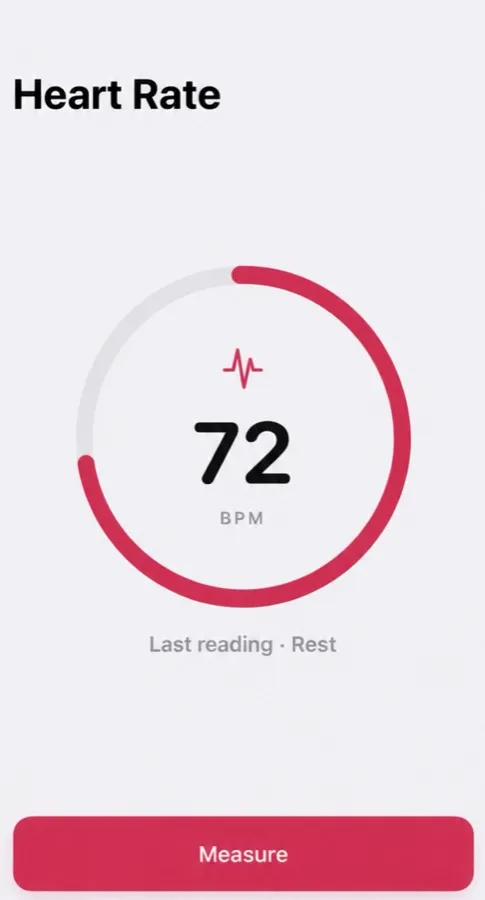
Want a real reading? Pulse reads it with your iPhone camera.
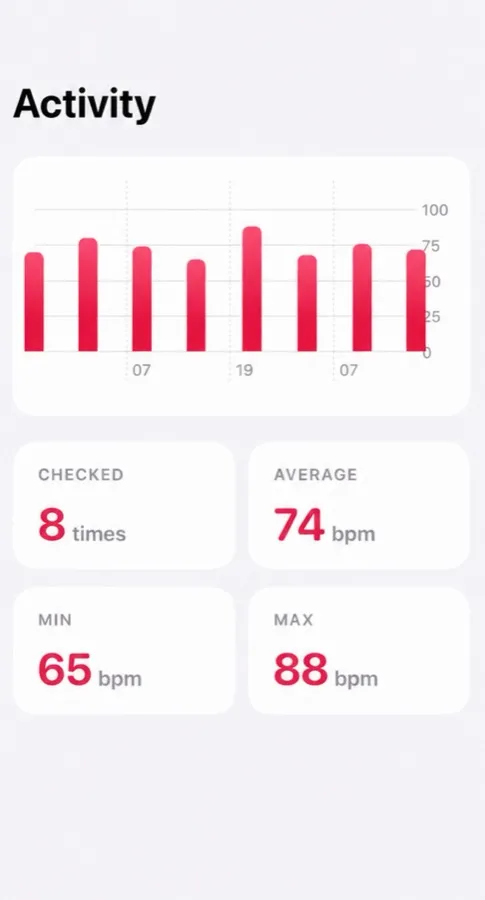
Cover the back camera with your fingertip — Pulse reads your heart rate from the light and keeps every reading, with your average, lowest and highest.
- Reads your pulse in about 15 seconds
- Tag each reading: morning, rest, workout, before bed
- History with average, min and max
Free to download, optional Pro. Not a medical device: Pulse reads and keeps your pulse, and it does not detect or predict disease. What the app does
Questions people ask
Is 55 BPM a good resting heart rate?
For many adults it is fine, especially if you exercise. It is below the 60–100 range, so if you feel dizzy or unusually tired, mention it to your clinician.
What resting heart rate do athletes have?
MedlinePlus lists 40–60 BPM for well-trained athletes.
Does a low heart rate mean you are fit?
It can, but not always. Medicines and some medical causes can lower it too. Symptoms and your own usual number matter more.
General information, not medical advice — medical disclaimer. Reviewed : sources and reference dates are listed below.
Sources · numbers checked · how we calculate · report an error
- National Heart, Lung, and Blood Institute. Arrhythmias: types and symptoms.
- MedlinePlus. Pulse (normal values by age; reviewed January 2025).
- NHS. Beta blockers (reviewed September 2026).
- Ostchega Y, Porter KS, Hughes J, Dillon CF, Nwankwo T. Resting pulse rate reference data for children, adolescents, and adults: United States, 1999–2008. National Health Statistics Reports No. 41. NCHS, 2011.
- Reimers AK, Knapp G, Reimers CD. Effects of exercise on the resting heart rate: a systematic review and meta-analysis of interventional studies. J Clin Med. 2018;7(12):503.