Alcohol was associated with a fast but regular heart rhythm in 25.9% of 3,028 Oktoberfest visitors; the odds about doubled for each 1 g/kg of breath alcohol. In 4,098 adults tracked overnight, alcohol reduced recovery during the first hours of sleep, more so at higher doses. Compare today’s morning pulse below.
Your usual vs. today
+8 BPM against your usual 62.
Compare two weeks
Type up to 7 mornings, with a space or comma between numbers. We use the middle value of each week.
The difference
+8 BPM against your usual 62.
That is more than an average day-to-day change. Note what is different today and count again tomorrow morning before reading much into it.
The Oktoberfest study
Researchers recorded short heart traces on smartphones from 3,028 visitors to the 2015 Munich Oktoberfest and measured their breath alcohol. Sinus tachycardia was found in 25.9% of them. Each 1 g/kg rise in breath alcohol went with roughly double the odds (odds ratio 1.96, 95% CI 1.66–2.31).
It was a one-time snapshot at a festival, so it cannot say the alcohol alone caused every case. Crowds, noise and excitement were there too.
What happens overnight
A Finnish study compared the same 4,098 employees on nights with and without alcohol. The body’s “recovery” state during the first three hours of sleep, worked out from beat-to-beat recordings, fell by an average of:
- 9.3 points after a low dose (up to 0.25 g of alcohol per kg of body weight)
- 24.0 points after a moderate dose (0.25–0.75 g/kg)
- 39.2 points after a high dose (above 0.75 g/kg)
Physical activity did not protect people from the effect. In that study, one portion was 12 g of ethanol.
Reading your own number
Alcohol is one reason a morning pulse can be high, so note it when you record a reading. Compare a night off with a night out, using the same method. A high pulse after a heavy night that does not settle, or comes with chest pain or fainting, is a medical matter. See what heart rate is dangerous.
When to talk to a clinician
A single reading moves around a lot. If your resting pulse is above 100 on most mornings, or below 50 and you are not a trained endurance athlete, mention it at your next checkup — bring your readings.
If a fast or slow pulse comes with chest pain, fainting, feeling about to faint, or trouble breathing, call 911 or your local emergency number now.
More questions
Want a real reading? Pulse reads it with your iPhone camera.
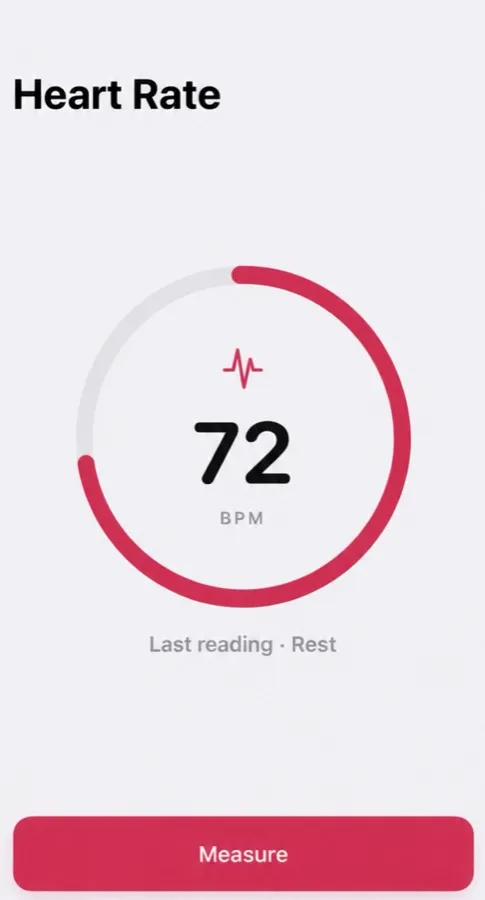
Cover the back camera with your fingertip — Pulse reads your heart rate from the light and keeps every reading, with your average, lowest and highest.
- Reads your pulse in about 15 seconds
- Tag each reading: morning, rest, workout, before bed
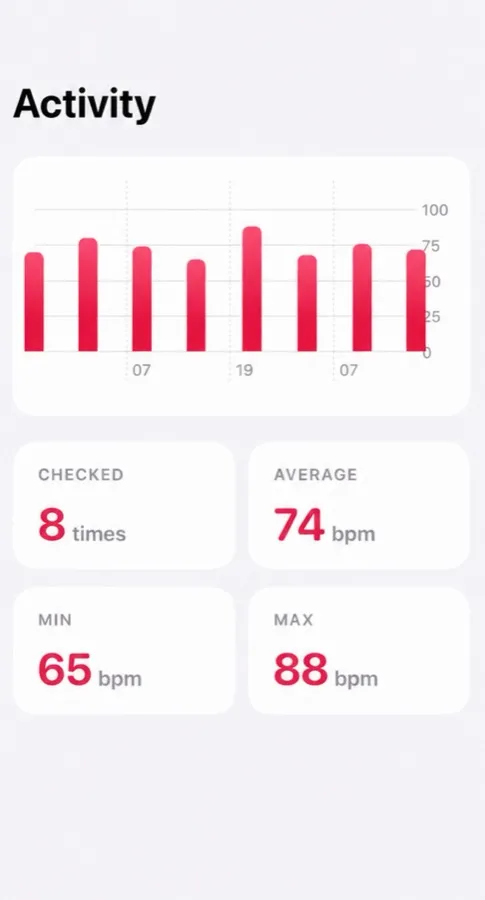
- History with average, min and max
Free to download, optional Pro. Not a medical device: Pulse reads and keeps your pulse, and it does not detect or predict disease. What the app does
Questions people ask
Why is my heart rate high after drinking?
Alcohol was linked to faster rhythms in the Oktoberfest study, and it changes how your heart is controlled during sleep. How much varies by person and dose.
Why is my heart rate high with a hangover?
We did not find a study measuring this directly. The overnight study shows the effect during sleep, so a higher morning number after drinking is plausible. Sit quietly and count again later in the day.
How long does alcohol affect heart rate?
In the Finnish study, after a low dose the measures were nearing normal by the third hour of sleep. Higher doses had a larger effect.
General information, not medical advice — medical disclaimer. Reviewed : sources and reference dates are listed below.
Sources · numbers checked · how we calculate · report an error
- Brunner S, Herbel R, Drobesch C, et al. Alcohol consumption, sinus tachycardia, and cardiac arrhythmias at the Munich Octoberfest (MunichBREW). Eur Heart J. 2017;38(27):2100–2106.
- Pietilä J, Helander E, Korhonen I, et al. Acute effect of alcohol intake on cardiovascular autonomic regulation during the first hours of sleep in a large real-world sample of Finnish employees. JMIR Ment Health. 2018;5(1):e23.
- NHS. Heart palpitations (reviewed March 2026).