When you are stressed or anxious, your body releases hormones that raise your pulse, and a racing heartbeat is a listed symptom of a panic attack. A stress spike normally settles when the stress passes. Compare a calm reading with your usual number below, and see a doctor about any racing heart that keeps coming back.
Your usual vs. today
+8 BPM against your usual 62.
Compare two weeks
Type up to 7 mornings, with a space or comma between numbers. We use the middle value of each week.
The difference
+8 BPM against your usual 62.
That is more than an average day-to-day change. Note what is different today and count again tomorrow morning before reading much into it.
Stress and quiet-rest diary
Record how stressed you felt and your pulse before and after quiet rest. These observations cannot tell whether anxiety caused a change.
Saved only in this browser on this device. Export before clearing browser data. No account or sync. For a general dated pulse sheet or a doctor PDF, use the heart rate log.
No observations yet.
What happens in your body
Stress hormones make your brain more alert, tense your muscles and increase your pulse. It is the same response that gets you ready to run, and it does not need a real danger. A difficult meeting or a worrying thought is enough.
Noticing your heart can make this stronger. Seeing a high number on a watch can cause worry, and worry keeps the number up.
How to get a fair number
- Sit down somewhere quiet for 5 minutes.
- Breathe normally, without trying to control it.
- Count for 30 seconds and double it.
- Compare it with your usual number, taken the same way, in the box above.
If checking is making you more anxious, it is reasonable to check less often: once in the morning, and not every time you feel your heart.
Don’t assume it is anxiety
A racing heartbeat has other causes too, so it should not be put down to anxiety without someone looking. See a GP or doctor if palpitations keep coming back, last more than a few minutes, or come with a heart condition or a family history of heart problems. Call 911 for chest pain, fainting or trouble breathing.
When to talk to a clinician
A single reading moves around a lot. If your resting pulse is above 100 on most mornings, or below 50 and you are not a trained endurance athlete, mention it at your next checkup — bring your readings.
If a fast or slow pulse comes with chest pain, fainting, feeling about to faint, or trouble breathing, call 911 or your local emergency number now.
More questions

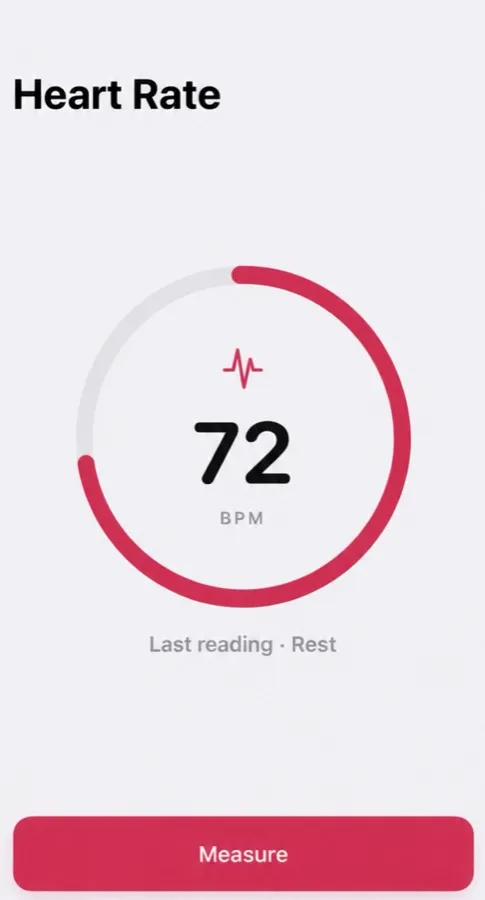
Want a real reading? Pulse reads it with your iPhone camera.
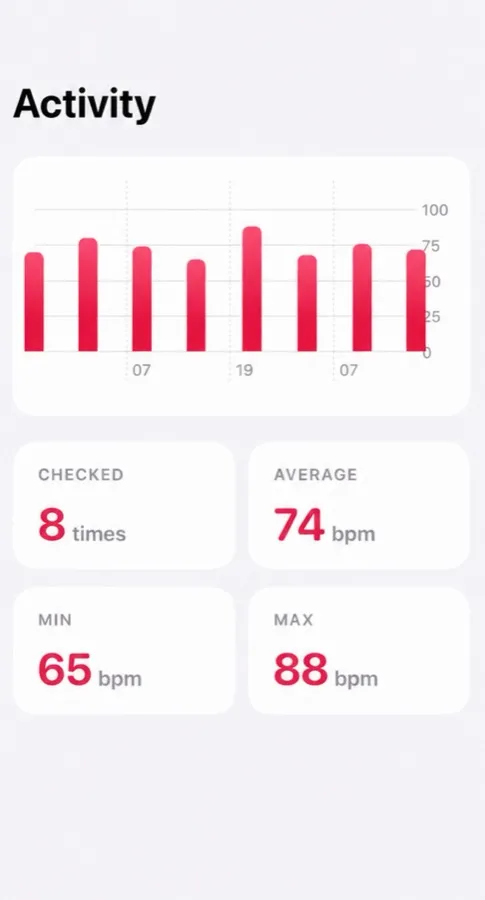
Cover the back camera with your fingertip — Pulse reads your heart rate from the light and keeps every reading, with your average, lowest and highest.
- Reads your pulse in about 15 seconds
- Tag each reading: morning, rest, workout, before bed
- History with average, min and max
Free to download, optional Pro. Not a medical device: Pulse reads and keeps your pulse, and it does not detect or predict disease. What the app does
Questions people ask
How high can anxiety make your heart rate?
We have not found a reliable figure for this, and it varies from person to person. If a fast heartbeat does not settle within minutes of resting, get it checked.
Can anxiety cause a high resting heart rate?
Stress hormones increase your pulse. Whether that shows in your morning number varies. A long-term rise is worth mentioning to your doctor.
Does a racing heart mean a panic attack?
Not always. It is one symptom of a panic attack, and it can have other causes. If it is new or keeps happening, see a doctor.
General information, not medical advice — medical disclaimer. Reviewed : sources and reference dates are listed below.
Sources · numbers checked · how we calculate · report an error
- MedlinePlus. Stress and your health (reviewed May 2026).
- NHS. Panic disorder.
- NHS. Heart palpitations (reviewed March 2026).
- Quer G, Gouda P, Galarnyk M, Topol EJ, Steinhubl SR. Inter- and intraindividual variability in daily resting heart rate and its associations with age, sex, sleep, BMI, and time of year. PLoS One. 2020;15(2):e0227709.