Walking raises your heart rate above its resting level; a brisk walk usually lands in the American Heart Association’s moderate range: 50–70% of your maximum (220 − age). That is 90–126 BPM at 40 and 80–112 at 60. A slow stroll may sit below it. Type your age below, or use the zones calculator for all five zones.
Your walking range
90–126 BPM · moderate walking range
AHA moderate intensity = 50–70% of 220 − age.
Your walking sessions
Record pulse before your walk and after stopping, with the walk duration. Compare sessions of similar duration; the age formula above is not a measured reading.
Saved only in this browser on this device. Export before clearing browser data. No account or sync. For a general dated pulse sheet or a doctor PDF, use the heart rate log.
No observations yet.
Slow, brisk and uphill
A slow stroll can stay not far above your resting pulse. Brisk walking — fast enough that talking takes a little effort — usually reaches the moderate range. Hills, stairs, heat and carrying weight push it higher.
Fitness changes the number too: the same pace feels easier and gives a lower pulse as you get fitter.
Is 100 or 120 when walking normal?
Both are ordinary for brisk walking in most adults. 100 BPM is about 55% of the estimated maximum at 40; 120 BPM is about two-thirds.
Using it to pace yourself
If you want “moderate” for the 150 minutes a week often recommended, aim for the range above, or use the talk test: you can talk, but not sing. A watch or the Pulse app tells you the number mid-walk.
Brisk-walk range by age
The AHA moderate range (50–70% of 220 − age) for each decade — the band most brisk walks fall into:
- Age 30: 95–133 BPM (estimated maximum 190)
- Age 40: 90–126 BPM (estimated maximum 180)
- Age 50: 85–119 BPM (estimated maximum 170)
- Age 60: 80–112 BPM (estimated maximum 160)
- Age 70: 75–105 BPM (estimated maximum 150)
- Age 80: 70–98 BPM (estimated maximum 140)
The range shifts down about 5 beats every 10 years because the estimated maximum falls with age. If you take a medicine that slows your pulse, these numbers won’t fit you — use the talk test instead.
When to talk to a clinician
A single reading moves around a lot. If your resting pulse is above 100 on most mornings, or below 50 and you are not a trained endurance athlete, mention it at your next checkup — bring your readings.
If a fast or slow pulse comes with chest pain, fainting, feeling about to faint, or trouble breathing, call 911 or your local emergency number now.
More questions

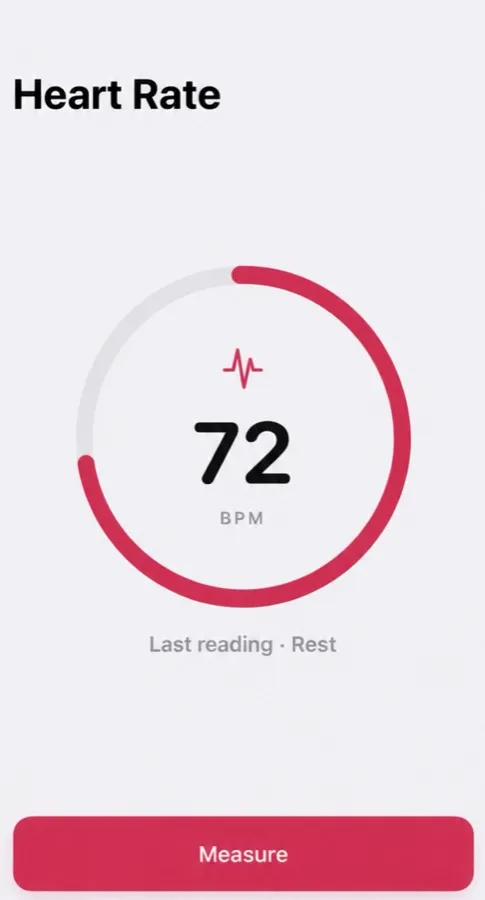
Want a real reading? Pulse reads it with your iPhone camera.
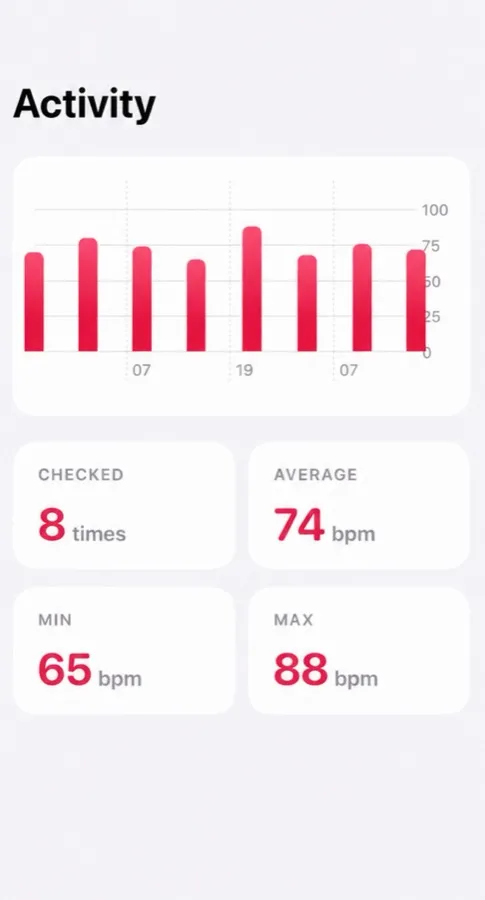
Cover the back camera with your fingertip — Pulse reads your heart rate from the light and keeps every reading, with your average, lowest and highest.
- Reads your pulse in about 15 seconds
- Tag each reading: morning, rest, workout, before bed
- History with average, min and max
Free to download, optional Pro. Not a medical device: Pulse reads and keeps your pulse, and it does not detect or predict disease. What the app does
Questions people ask
What heart rate is too high when walking?
Above 85% of your maximum is vigorous for most people. If you feel chest pain, faintness or unusual breathlessness, stop and get help.
Why is my heart rate high when I walk slowly?
Heat, hills, dehydration, poor sleep or caffeine can all raise it. If it is unusually high for an easy walk on most days, mention it to your clinician.
General information, not medical advice — medical disclaimer. Reviewed : sources and reference dates are listed below.
Sources · numbers checked · how we calculate · report an error
- American Heart Association. Target Heart Rates Chart.
- Ostchega Y, Porter KS, Hughes J, Dillon CF, Nwankwo T. Resting pulse rate reference data for children, adolescents, and adults: United States, 1999–2008. National Health Statistics Reports No. 41. NCHS, 2011.
- Mayo Clinic. Heart rate: What’s normal? (Expert answers).